In the heart of Düsseldorf’s bustling Carlstadt district lies a vibrant square that serves as more than just a place to buy groceries. It is a sensory explosion, a meeting point for locals, and an undisputed paradise for gourmets.
This is the Carlsplatz—the city’s oldest and most famous weekly market.
While today it is known for champagne bars, exotic spices, and high-end bistro food, the Carlsplatz has deep roots in the practical daily life of Düsseldorfers, evolving over centuries from a humble necessity to a premier culinary destination.
From Humble Beginnings to Royal Patronage
The market’s origins date back far before it occupied its current square. For centuries, Düsseldorf’s main market was located directly in front of the Rathaus (City Hall) on the Marktplatz near the Rhine. By the 18th century, however, the city was growing rapidly. The old market square had become hopelessly overcrowded, chaotic, and unsanitary. Enter Duke Carl Theodor (1724–1799), an enlightened ruler with a vision for modernizing Düsseldorf. Recognizing the need for better urban planning, he authorized the expansion of the city southward, creating the district that today bears his name: the Carlstadt. As part of this urban renewal, the market was relocated in the late 18th century from the cramped Rathaus square to a newly designed, spacious open area within the new district.A Name and an Evolution
For decades after the move, the new market square was simply known as the “neuer Markt” (new market). It wasn’t until the mid-19th century that the square was officially christened Carlsplatz in honor of Duke Carl Theodor, the man whose vision had created the space. Throughout the 19th and early 20th centuries, Carlsplatz remained a traditional weekly market. It was the place where housewives and cooks from the surrounding neighborhoods came to buy essentials: potatoes, local vegetables, butchered meat, and dairy. It survived the upheavals of wars and economic crises, remaining a steadfast supplier for the city’s population.The Gourmet Revolution
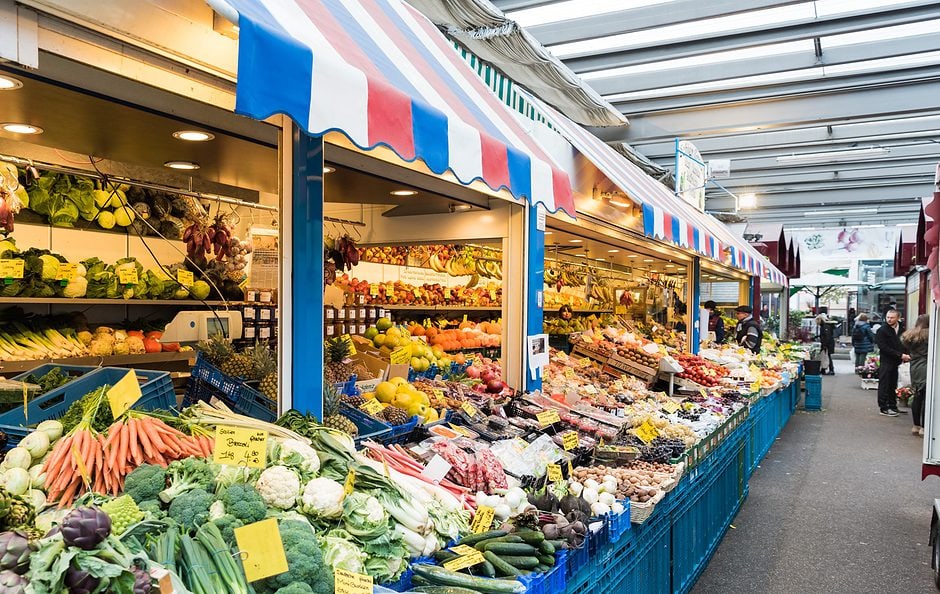
The true transformation of Carlsplatz began in the latter half of the 20th century, accelerating in the 1980s and 90s. As supermarkets took over the role of providing basic staples, traditional open-air markets across Europe faced a choice: adapt or decline. Carlsplatz chose adaptation. It began pivoting from necessities to specialties. The wooden stalls were upgraded, and in the late 1990s, elegant glass pavilions were added, offering protection from the elements while maintaining an open-air feel. This architectural modernization paved the way for a culinary shift. Suddenly, you weren’t just buying ingredients for dinner; you were coming for lunch. The market became a destination for high-quality gastronomy, offering everything from fresh oysters and fine wines to artisanal cheeses and exotic fruits that Carl Theodor could only have dreamed of.Meeting the Modern Market: Current Stallholders
Today, Carlsplatz is home to over 60 traders. What makes the market special is the blend of multi-generational family businesses operating alongside trendy new culinary concepts. Here is a taste of some of the stallholders that define the current Carlsplatz experience:1. Metzgerei Inhoven (The Sausage Sorcerers)
Peter Inhoven is practically a local celebrity in Düsseldorf. While his stall offers excellent standard cuts of meat, he is famous for his creative, often wild sausage creations. Forget standard bratwurst; at Inhoven, you might find sausages flavored with surprising ingredients like apricots, Asian spices, or even Altbier (Düsseldorf’s local beer). It is a must-visit for barbecue enthusiasts.2. Dauser (The Soul Warmer)
Sometimes, you just need comfort food. Dauser is a Düsseldorf institution, famous throughout the region for its soups and stews. Their stand at Carlsplatz is perpetually busy, especially on cold days, with locals lining up for a bowl of their legendary, hearty Gulaschsuppe (goulash soup) or Erbsensuppe (pea soup). It is traditional German “Hausmannskost” at its best.3. Obst & Gemüse Franz-Josef Krebs (The Foundation)
Despite the gourmet flair, Carlsplatz hasn’t forgotten its roots. Stands like Franz-Josef Krebs ensure that fresh, high-quality produce remains central to the market. They provide a stunning visual array of seasonal fruits and vegetables, ranging from local regional asparagus in the spring to exotic imports year-round.4. Kaffee Reich (The Fuel Stop)
A modern market isn’t complete without excellent coffee. Kaffee Reich was one of the pioneers of the specialty coffee movement in Düsseldorf. Their glass pavilion offers a perfect vantage point to people-watch while enjoying expertly roasted espresso drinks. They are serious about their beans, and the aroma draws in shoppers from across the square.5. Fladi (The Mediterranean Taste)
For a quick, fresh lunch, Fladi is a popular stop. They specialize in varied Mediterranean spreads, pastes, antipasti, and filled flatbreads. It represents the modern, international flavor of the market, offering healthy and flavorful options that are perfect for a midday break.6. The Flower Stalls (The Visual Heart)
While not for eating, the numerous florists on the square are essential to the Carlsplatz atmosphere. Stalls like Blumen Huppertz or Floristik und Ambiente transform sections of the market into a riot of color, offering elaborate bouquets and seasonal arrangements that enhance the vibrant feel of the square.A Living Tradition
Today, Carlsplatz is a delicate ecosystem. It balances the needs of residents doing their weekly shop with tourists looking for a gourmet experience, and office workers seeking a quick lunch. It is a place where history is not just remembered, but tasted daily. Duke Carl Theodor may have built the square to organize the city, but the people of Düsseldorf turned it into its heart and stomach.Powered by GetYourGuide
Powered by GetYourGuide